What is an Agent Harness?LangChain·Oct 13, 2026What it covers
- Harness Definition
- Model vs. Agent
- Core Harness Components
The model was never the workThe file system, sub-agent isolation, and on-demand skill loading are where a solo builder actually spends the week, not in the weights. LangChain's framing of agent as model-plus-harness makes that engineering surface legible, and pointing to Deep Agents as a reference implementation gives a starting point instead of a blank page.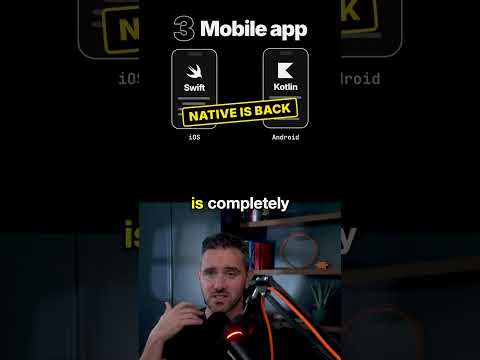 Most people only build web apps with AI. Here are 7 things you can build:Rob Shocks·Oct 13, 2026What it covers
- Web apps
- Desktop apps
- Native mobile apps
Platform follows the problemThe reflex to ship a web app is the path of least resistance, not necessarily the right surface for the user's problem. When an agent writes Swift and Kotlin without a React Native middleman, the cost of matching platform to problem drops sharply. A solo builder's question shifts from 'can this be built?' to 'where does the user already live, and does a browser extension or native app meet them there better than a login wall?' The Viral "Reverse Engineer Anything" Repo Explained ClearlyNate Herk | AI Automation·Oct 13, 2026What it covers
- The Viral Repo
- Why It Went Viral
- How It Works
The cake is the specThe cake analogy reframes what a solo builder needs: not the bakery's kitchen, but the ability to deconstruct the output. When an agent can read a shipped product at the binary level and reconstruct features, the recipe stops being a gate and becomes a reference. The viral pull is less the tool than the idea that observation can replace access. I Tested the Viral Reverse Engineer Anything Skill. What You Need to Know.Nate Herk | AI Automation·Oct 13, 2026What it covers
- Reverse Engineer Anything
- Better AI Outputs With References
- Rebuilding App Features
Reference quality is the skillThe five-step workflow handles mechanical recreation, but the transcript makes clear that reference examples of desired output determine whether the result is usable. For a solo builder shipping AI products, that shifts daily practice from writing code to articulating what 'good' looks like with concrete artifacts. The 'software is done' framing is half-joke, but the underlying point holds: the constraint moves from implementation to specification. My Coding Agent Took 19 Seconds to Say AnythingAlex Ziskind·Oct 13, 2026What it covers
- Coding Agent Latency
- M5 Ultra Requirements
- Hardware Build
The compounding reread taxA coding agent that answers in 0.12 seconds on turn one can sit silent for 19 seconds by turn twenty-five, because every turn forces a reread of the full conversation on a single GPU. For a solo builder shipping agent-based features, the latency isn't a fixed cost—it multiplies with each interaction, and caching won't flatten the curve. The design question shifts from how much context to allow to how to bound it before the user waits. OpenAI's AI Wrote 700 Math Papers. Engineers Still Won't Trust AI With Their Code.Nate B Jones·Oct 13, 2026What it covers
- More than 700 math papers and the engineers who still don't trust AI code
- What the math papers actually contain
- The unreleased model and OpenAI's three-hour figure
Papers don't ship code700 papers from a single prompt is a demonstration, not a delivery. The engineers refusing to hand over production code are the ones who carry accountability when a system fails at 3am, and that is the gap a solo builder actually lives in. The artifact is easy; the trust that a system can be stood behind in production is the hard part. Or is he?Maximilian Schwarzmüller·Oct 13, 2026What it covers
- The 'software is dead' narrative
- Nuance and complexity
- Build-in-public perspective
The provocation, not the predictionThe 'software is dead' framing collapses three distinct questions—development, paid software, personal tooling—into one provocation. For a solo builder shipping AI products, the signal isn't the obituary but the expansion of personal software: narrow, self-built tools gain ground even as broad maintained platforms contract. The nuance is where the actual work lives. I Built the Ultimate AI Board of AdvisorsNate Herk | AI Automation·Oct 13, 2026Debate without stakesThe multi-agent argument pattern is a clean engineering demo — personas clashing in a shared room, votes tallied, decisions surfaced. But for a solo builder on a tight ship-and-iterate loop, the harder question is whether simulated counsel from public personas replaces the feedback that only a real user or a real co-founder can give. The agents argue well; the product still has to ship.
 I Built the Ultimate AI Board of Advisors (free claude skill)Nate Herk | AI Automation·Oct 13, 2026What it covers
- Meet the Roast Room
- The Advisors Debate
- The Final Verdict
The board that doesn't existA solo builder ships without a board to pressure-test a decision against. Seven advisory voices writing opening positions, debating, and returning a scored verdict approximates that friction better than a single prompt ever will. The skill being free and installable in Claude Code keeps the barrier to that friction near zero.
 Ollama Decision Models: The End of Jev?!NeuralNine·Oct 12, 2026What it covers
- Ollama as a local LLM runtime
- LLM-powered decision models
- Jevons Paradox in AI
Decision models on consumer hardwareA decision model running locally on consumer hardware with predefined output structures removes the per-call API cost from a solo builder's shipping calculus. The Jevons question the title raises is practical: when inference gets cheaper and faster locally, the likely outcome is more structured AI features shipped per week, not fewer. The barrier between prototype and production for tasks like classification or routing narrows when the runtime is a local install rather than a cloud dependency. Karpathy's AI Divide: Which Side Are You On?Rob Shocks·Oct 12, 2026What it covers
- Intro
- The gap Karpathy noticed
- The funnel: four layers
The funnel is the productA solo builder doesn't get to pick which tier of Karpathy's funnel to serve; the product has to collapse the distance between the 6 billion who've barely touched AI and the 5,000 insiders who push models to their limits. The practical takeaway—pushing a model harder than the default—becomes a feature, not a user skill. That's where the shipping work lives. Cloudflare acquired Deno ... but NOT because of DenoMaximilian Schwarzmüller·Oct 12, 2026What it covers
- Cloudflare's Acquisition of Deno
- Motivation Beyond the Runtime
- The Deno Team
The runtime was the vehicleCloudflare did not buy a JavaScript runtime; it bought a team and a project called celld, with Deno as the delivery mechanism. For a solo builder choosing infrastructure, the signal is that the trajectory behind a tool can outweigh the tool's current shape—what a runtime is becoming matters more than what it is today. Data Governance Vs. Data Management! The Difference ExplainedThe Data and AI Guy·Oct 12, 2026What it covers
- One word, two jobs: the governance meeting
- What data management actually is
- What data governance actually is
Same word, two jobsFor a solo builder, the governance-versus-management split collapses into one pair of hands, so the failure mode is linguistic: building a catalog when the actual blocker is an unresolved decision about who owns a calculation. The DMBOK framing at least names which job is stalled before a tool gets reached for. The 'which to build first' verdict is the part that saves time when there is only one person in the room. Why "best model" is the wrong question nowLangChain·Oct 12, 2026What it covers
- Model saturation
- Shift in developer priorities
- Why 'best model' is the wrong question
The spec is now costWhen every model clears the bar on common engineering tasks, the optimization target shifts from capability to price per call. For a solo builder shipping agents, that means the architecture question stops being which model is smartest and becomes what is the cheapest path that still works. The moat was never the model selection; it was the system wrapping it. IBM WatsonX Orchestrate Neo4j Integration DemoNeo4j·Oct 12, 2026What it covers
- Agent Architecture
- Knowledge Graph for Context
- MCP Tools & Custom Functions
Graph memory, no teamA plain-English agent over a Neo4j knowledge graph, wired through MCP tools and an open-weight model, with the whole integration open-sourced on GitHub. For a solo builder, that makes structured, context-aware memory a composable layer rather than a from-scratch pipeline. The Slack deployment path keeps distribution simple: ship the agent where people already work. Graduate From Claude... To Claude CodeRiley Brown·Oct 11, 2026What it covers
- The Core Argument
- Target Audience
- The 'Graduation' Framing
The interface sets the ceilingFor a solo builder, the tool's interface determines the scope of what actually gets shipped. Shifting from a chat window to a code environment moves the AI from suggestion engine to operator on the system — the '50 times more' claim is really about removing the constraint of the medium. The 'graduation' framing is just a name for when the tool stops advising and starts doing. The AI Paradox: 5 Human Skills That Are More Valuable Than EverNate B Jones·Oct 11, 2026What it covers
- The story that AI is taking your skills
- Revisit the projects you ruled out for 2027
- Taste is acting on something you care about
The bottleneck moved upstreamWhen the work between an idea and a useful outcome is within reach, the constraint stops being capability and starts being taste, focus, and follow-through. The 'genius on a super team' narrative was always a story about resource access, not about the actual work of shipping. For a solo builder, the question shifts from 'can this be built?' to 'which shelved project deserves a second look?' I Tried 100+ Github Repos for Claude. These 6 Are the BestNate Herk | AI Automation·Oct 11, 2026What it covers
- Finding the Best Claude Repos
- Video Editing With Hyperframes
- Google Workspace CLI and Apify
The filter is the bottleneckA hundred thousand repos means the real work shifts from building to sifting. For a solo builder, the hours spent testing and discarding tools are hours not spent shipping, and 'ten times faster' rarely survives contact with a real deadline. The repos that actually stick are the ones that fold into an existing workflow rather than adding another layer to maintain. Claude's New Updates Are Insane… But Grok Bot Is EVEN BiggerRiley Brown·Oct 10, 2026What it covers
- Intro
- Claude Dashboards & Claude Motion
- AI Video Editing with Opus 5.5
Density isn't directionA week that stacks Claude Code dashboards, a new ChatGPT interface, and GrokBot routing Claude Opus into its platform rewards attention more than it rewards decisions. For a solo builder, the multi-model routing thread is the one worth pulling on—no need to rebuild around a single vendor when the plumbing is already there. But scanning every drop in sequence is a consumer habit, not a shipping one. Jev Can Massively Speed Up Hermes Agents...NeuralNine·Oct 10, 2026What it covers
- Jev and Hermes Agents
- Performance Improvement
- Build-in-Public Context
Cheap models handle the forksInjecting a small decision model as a pre-hook lets the large reasoning model skip trivial branching—choosing which command to run, for instance—and only engage where reasoning actually matters. For a solo builder shipping an agent to real users, that latency and cost reduction is the difference between something people tolerate and something they walk away from. The wiring is simple enough to pull off without a team. AI Benchmarks are dead #AI #benchmarks #Google #Gemini #AInewsNate B Jones·Oct 10, 2026What it covers
- Benchmarks are obsolete
- Gemini 4 Argon's Vals Index #1
- Customer obsession over scores
The fix loop beats the scoreA model topping the Vals Index while remaining largely unusable is the clearest signal that a leaderboard number and a working product are different things. For a solo builder, the work collapses into one loop: use the AI obsessively, find what breaks, fix it, repeat. That loop is the only benchmark that produces something a user can actually rely on. What is a Skill?LangChain·Oct 9, 2026What it covers
- Definition of a Skill
- Context Window Management
- Lazy Loading Mechanism
Lazy loading beats crammingThe failure point in long-running agents is rarely the model itself; it is the context window stuffed with everything at once. A folder of instructions, scripts, and reference docs that exposes only its name and description at startup is a pattern a solo builder can wire in without waiting for a larger context window. The token savings and speed gains come from restraint, not from a bigger model. Closed Source Is No Longer a Moat (REA Explained)Rob Shocks·Oct 9, 2026What it covers
- Intro
- What REA actually is (and isn't)
- How it works
The moat was never the codeWhen a coding agent can inspect a compiled binary and reconstruct a feature from evidence alone, the old strategy of shipping closed and waiting for competitors to fall behind loses its grip. For a solo builder, distribution and iteration speed matter more than keeping implementation private. The legal and security caveats around tools like REA are real, but the direction of travel is clear enough to plan around. Oracle’s New AI Only Thinks When It Has ToNate Herk | AI Automation·Oct 9, 2026What it covers
- Fusion Claw
- Selective AI Processing
- AI-Software Division of Labor
Reasoning is not executionA solo builder shipping AI products often routes every step through a frontier model, paying for reasoning where none is needed. Oracle's Fusion Claw splits the work: the model plans and adapts, then deterministic code handles the high-volume execution. That boundary—where thinking ends and doing begins—is the line a solo builder draws to keep infrastructure costs from swallowing the margin. Three Questions Every Agent Engineer Should Be Able To AnswerLangChain·Oct 9, 2026What it covers
- What it means to own your own intelligence
- The three questions every agent engineer should answer
- Question 1: mining production traces to find failures
The solo failure loopFor a solo builder, the three-question framework—where it fails, how to reproduce, what to change—becomes the entire quality loop when no one else is watching. Fine-tuned judges and world specs that mimic production stop being infrastructure questions and become the only practical way to catch failures before users do. The harness-versus-model split matters most when there is no one else to hand the problem to. The Cheapest 4TB DGX Spark Alternative… ASUS GX10Alex Ziskind·Oct 9, 2026What it covers
- ASUS GX10 as a DGX Spark alternative
- 4TB storage upgrade
- Value proposition shift
The cost floor dropsWhen the upgrade path is a drive cloner, a 2242 4TB NVMe, and a three-second button hold, the hardware barrier for local AI workloads shrinks to the price of a swap. A solo builder iterating on models no longer needs to justify a DGX Spark line item; the GX10 makes the experiment cheap enough to run and discard. That shifts where the real constraints live — from procurement to prompt design. Everyone Is Getting ChatGPT Dots WrongRiley Brown·Oct 9, 2026What it covers
- Intro
- What is Dot?
- #1 Voice Chat with Dot
The walk replaces the admin hourA solo builder's bottleneck is rarely the build itself; it is the admin and coordination that fragments the day into unusable pieces. A forty-minute walk with voice mode handling email, Slack, and content planning collapses that overhead into time already spent in motion, and the same voice interface reaches into Codex sessions without breaking stride. The practical takeaway for a one-person shop is not the agent feature but the interface shift: the tool meets the builder where they already are, rather than demanding a desk and a screen.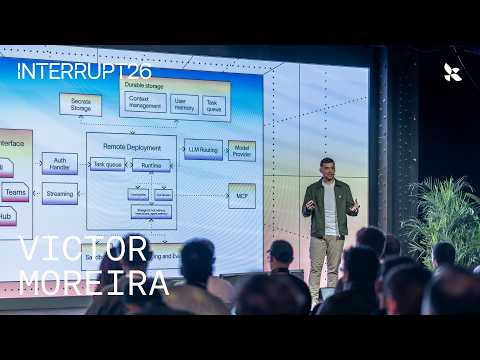 Managed Deep Agents | Deploying mission critical agents to productionLangChain·Oct 9, 2026What it covers
- What is an agent harness, and why does context matter?
- The four core areas that make up a deep agent
- Madrigal spins up research agents in hours instead of weeks
The folder-to-production gapThe production checklist LangChain walks through—scoped credentials, versioned context, channel-aware memory, evals—is the part a solo builder skips to ship fast, then pays for in late-night debugging. Bundling that into a CLI deploy from a local folder is a reasonable convenience, but the harder question for a one-person shop is whether caller identity and channel-aware memory matter before the second user arrives.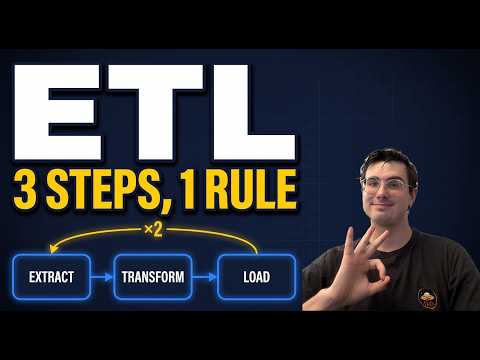 What is ETL? ETL Pipelines Explained for Beginners!The Data and AI Guy·Oct 9, 2026What it covers
- The Monday spreadsheet problem
- What ETL means: extract, transform, load
- Why ETL exists, and why T comes before L
The Monday tax, scripted outThe Monday ritual is the tax a solo builder pays on every data source. A single scheduled script that is safe to run twice replaces the paste-dedupe-match cycle, and that idempotency rule is what makes the automation trustworthy enough to stop babysitting. For anything shipping on top of that data, the pipeline is the product's floor. Unlock Graph Insights from BigQuery Without Moving Your DataNeo4j·Oct 9, 2026What it covers
- Neo4j Virtual Graph
- Zero Data Movement
- Uncovering Hidden Relationships
The ETL tax is optionalA solo builder shipping an AI product often needs relational context—who connects to whom, what depends on what—but the traditional path means standing up a pipeline, duplicating data, maintaining sync. A virtual graph layer over existing warehouse data collapses that into a query, so the relationship intelligence that used to require a data team can sit inside a one-person product. The constraint was never the graph; it was the plumbing around it.